The regions of Japan
Four main islands, 47 prefectures, and a 3,000-kilometre spread from sub-arctic to subtropical. Almost everyone visits the same 400 kilometres of it.
The Golden Route problem
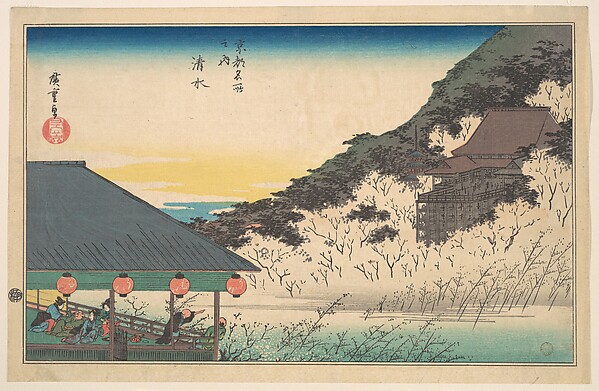
Tokyo, Hakone, Kyoto, Nara, Osaka. It is the standard first itinerary for good reasons: the Shinkansen makes it trivial, the sights are genuinely first-rank, and the infrastructure is set up for visitors. It is also where essentially every first-time visitor goes, which is why Kyoto in November now has crowd-control staff at Kiyomizu-dera and why Kamakura's Enoden line queues for an hour to photograph a level crossing.
The fix is not to avoid those places. It is to bolt two or three days of somewhere else onto the same trip. The rail network makes this far easier than people expect — Kanazawa is 2.5 hours from Tokyo, Hiroshima under two from Kyoto, and the Kiso valley is a local train off the main line.
The eight regions
Roughly in the order a determined traveller might work down the country.
北海道 · Hokkaido
Space, snow and food
The northern island: a fifth of Japan's land, a twentieth of its people. Settled by the Japanese state only from the 1870s, over the Ainu whose land it was — a history the excellent Upopoy national centre at Shiraoi now addresses directly. Come for Daisetsuzan and Shiretoko national parks, powder snow at Niseko and Furano, the lavender in July, Sapporo's Snow Festival in February, and the best seafood and dairy in the country.
東北 · Tohoku
The deep north
Basho's country, and still the least-visited part of Honshu. Mountain temples at Yamadera, the Michinoku Coastal Trail along the tsunami-hit shoreline, the gorge at Geibikei, Aomori's Nebuta festival in August, and some of the best rustic onsen in Japan — Nyuto, Ginzan, Zao. Also the hardest region to reach without a car, and the most rewarding for it.
関東 · Kanto
Tokyo and its orbit
Greater Tokyo holds around 37 million people and is the largest metropolitan area on earth, but functions as a set of villages with their own characters — Yanaka and Kagurazaka are nothing like Shibuya. Within two hours: Kamakura's Zen temples, Nikko's baroque Tosho-gu, Hakone for Fuji views and hot springs, and the Boso and Izu coasts.
中部 · Chubu
The Alps and the old roads
The mountainous middle, and the most underrated region in the country. The Northern Japan Alps above Kamikochi; the thatched farmhouses of Shirakawa-go; Takayama's morning markets; Matsumoto's black castle; the Nakasendo post towns at Tsumago and Magome; Kanazawa's intact Edo districts; and Nagano's Zenko-ji and snow monkeys at Jigokudani.
関西 · Kansai
The historical core
Kyoto and Nara hold the great majority of Japan's pre-modern architecture; Osaka is the counterweight, commercial and irreverent. Beyond them: Himeji's castle, Koya-san's monastery town and temple lodgings, the Kumano Kodo pilgrimage trails in Wakayama, and Kobe's port-city cosmopolitanism.
中国 · Chugoku
The Inland Sea
Western Honshu, split between the mild Seto Inland Sea coast and the wilder Sea of Japan side. Hiroshima and Miyajima; Okayama's Korakuen garden; the canal quarter at Kurashiki; Izumo Taisha, one of the oldest shrines in Japan; and the Shimanami Kaido, a 70-kilometre cycle route across six islands on dedicated bridge lanes.
四国 · Shikoku
The pilgrim island
The smallest and least industrial of the four main islands, defined by the 88-temple Shikoku Henro circuit — some 1,200 kilometres, walked in six to eight weeks or driven in one. Also the Iya valley's vine bridges, the Naruto whirlpools, Dogo Onsen (one of the oldest bathhouses in Japan), and Naoshima and Teshima, the contemporary art islands.
九州・沖縄 · Kyushu & Okinawa
Volcanoes and a former kingdom
Kyushu is where the continent always arrived first: Nagasaki's Dutch and Christian history, Fukuoka's food stalls, the caldera at Aso, Beppu and Yufuin's hot springs, Kagoshima under the smoking cone of Sakurajima, and the cedar rainforest of Yakushima. Okinawa was the independent Ryukyu Kingdom until 1879 and remains culturally distinct — different food, music, architecture and history, including the 1945 battle and the American bases that followed.
Three itineraries that work
First trip — 10 to 14 days
- Shape
- Tokyo (4) → Hakone or Nikko (1–2) → Kanazawa (2) → Kyoto (4) → Osaka or Hiroshima (2)
- Why
- Kanazawa is the cheap upgrade: it costs one train leg, breaks up the Tokyo–Kyoto run, and gives you an intact Edo townscape without Kyoto's queues
- Watch for
- Do not try to do Kyoto as a day trip from Osaka. It is a walking city and needs mornings
Second trip — the mountains and the old roads
- Shape
- Tokyo → Matsumoto → Kamikochi → Takayama → Shirakawa-go → Kiso valley (Nakasendo walk) → Nagoya
- Why
- Chubu on its own terms. Alpine walking, thatched villages, and the best surviving stretch of pre-modern highway in the country
- Watch for
- Kamikochi closes over winter; the Nakasendo walk is easiest May–June and October–November
Third trip — the west and the islands
- Shape
- Osaka → Naoshima and Teshima → Shimanami Kaido by bicycle → Hiroshima and Miyajima → Fukuoka → Beppu or Yakushima
- Why
- Contemporary art, a genuinely world-class cycle route, and Kyushu’s volcanic landscape — almost none of it crowded
- Watch for
- Naoshima’s museums close on Mondays and ferries are infrequent; plan around the timetable, not the other way round
Fewer places, longer in each. Japan makes it very easy to keep moving and very hard to enjoy having done so. Three nights somewhere beats one night in three places, every time — and the second morning in a town is almost always the best one.